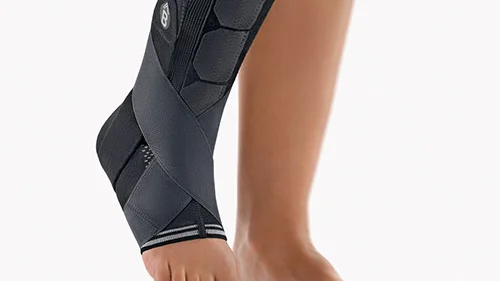
BORT Fußheberorthese, Quelle: BORT
Foot Drop Orthosis for CMT: My Experience with the BORT Orthosis
When you live with Charcot-Marie-Tooth (CMT), the way you walk often changes gradually.
At some point, I noticed that I could no longer properly lift my foot. Every step became more unstable, especially on uneven ground.
That’s when I started looking for a solution and came across the BORT foot drop orthosis.
You can find more details about the product directly on the manufacturer’s website:
https://www.bort.com/en/produktdetail.html?product=054300
One thing I didn’t expect:
In my case, the orthosis was covered by health insurance, so I only had to pay a small co-payment. Depending on where you live, coverage and costs may vary.
In this article, I share my personal experience with a foot drop orthosis and how it has changed my daily life.
Why I Needed a Foot Drop Orthosis
Foot drop is a common symptom of Charcot-Marie-Tooth (CMT), and in my case, it gradually became more noticeable over time.
My biggest issue was frequent tripping. Even small uneven surfaces became a real challenge.
This is something many people with CMT experience, and it can have a significant impact on everyday life.
What Is a Foot Drop Orthosis?
A foot drop orthosis (also known as an ankle-foot orthosis, or AFO) is a device designed to help lift the foot while walking. This prevents the toes from catching on the ground.
The BORT foot drop orthosis uses a dynamic support mechanism to assist with foot movement during the walking cycle. This helps create a more stable gait, even when muscle strength is limited.
Foot drop is a common issue in people with CMT and can significantly affect mobility.
First Impressions and Getting Used to a Foot Drop Orthosis
To be honest, I felt a bit overwhelmed when I first put the foot drop orthosis on. It seemed more complicated than I had expected.
But after a short time, I quickly got the hang of it. With a bit of practice, putting the AFO on became much easier.
Wearing the orthosis also felt unusual at first, especially since I use it on both feet. Over time, though, it became much more comfortable.
Daily Life with a Foot Drop Orthosis
I don’t wear the AFO all the time, but rather when I need it. specially when I know I’ll be walking for longer periods of time or dealing with uneven ground.
The biggest difference is how I walk now. My foot no longer drops uncontrollably, which makes each step feel much more stable.
It doesn’t feel like it used to before my symptoms progressed. But the difference is noticeable. I walk more steadily and feel much more confident.
I also find that I spend less energy trying to consciously control every step. As a result, walking feels more natural and less exhausting overall.
Downsides and Limitations
Of course, there are also a few things to keep in mind:
- it may feel unusual to wear at first
- putting the orthosis on requires a bit of practice
- some movements may not feel completely natural right away
That said, none of these points were a real issue for me in the long run. Overall, the benefits clearly outweigh the drawbacks.
Who Is a Foot Drop Orthosis Suitable For?
A foot drop orthosis (AFO) can be especially helpful if foot drop is causing problems in everyday life.
In particular, if you feel unsteady while walking or experience frequent tripping, it can provide valuable support.
At the same time, it’s not always necessary to wear it all the time. I personally use it only when I really need it, and that approach works well for me.
How to Get a Foot Drop Orthosis
In most cases, a foot drop orthosis is prescribed by a doctor, for example by a neurologist or an orthopedic specialist.
With this prescription, you can visit a medical supply store, where the orthosis will be fitted and explained to you.
In many cases, health insurance may cover the cost of an AFO. However, coverage and out-of-pocket expenses vary depending on your country and insurance provider.
It’s always a good idea to check with your doctor or insurance company to understand your specific options.
Conclusion: Is a Foot Drop Orthosis Worth It?
After three months, my experience has been clearly positive.
The orthosis doesn’t restore normal function. But it makes a noticeable difference in managing foot drop in daily life.
For me, it’s not a perfect solution, but it’s one that truly makes a difference.