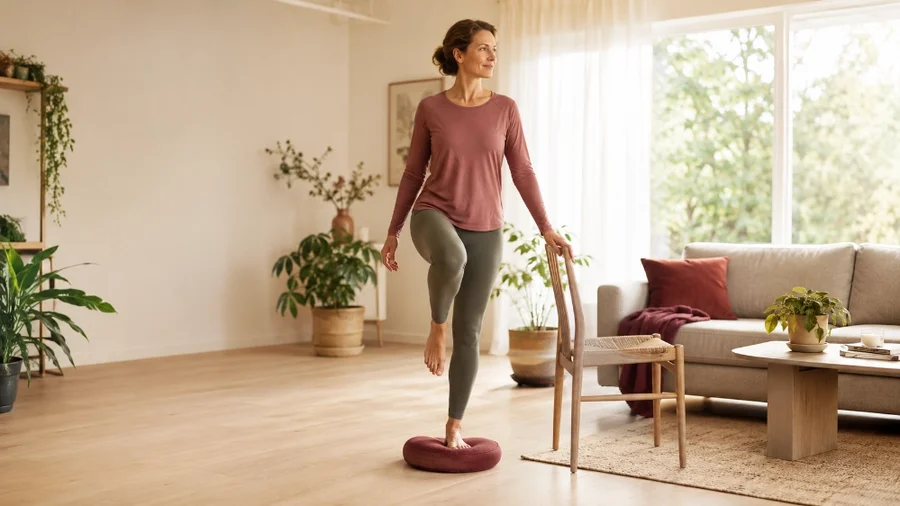
Balance exercises support stability and mobility in everyday life with CMT.
Charcot-Marie-Tooth Treatment: Therapy, Exercises and Daily Life
Charcot-Marie-Tooth (CMT) is not curable, but it can be managed effectively.
The right treatment can help reduce symptoms, maintain mobility and significantly improve quality of life.
The goal is to stay active, independent and as pain-free as possible in everyday life.
There are different treatment options, ranging from physiotherapy and assistive devices to pain management and emerging research approaches.
The earlier treatment begins, the better the long-term outcomes.
There is no one-size-fits-all approach. Each type of CMT progresses differently, so treatment needs to be tailored individually. Close collaboration between doctors, therapists and patients is essential.
Physiotherapy and Movement
Regular movement is a central part of CMT treatment.
Physiotherapy helps slow down muscle loss, prevent deformities and improve balance. This allows many people to stay mobile for a long time.
The main goals of physiotherapy are:
- improving mobility and muscle strength
- enhancing balance and coordination
- reducing pain through gentle movement
Examples of suitable exercises include:
- stretching exercises for feet and legs
- swimming, yoga or cycling
- light strength training using resistance bands
It is important to avoid overexertion. Regular, targeted movement is usually more effective than intense training.
Many therapists recommend continuing exercises at home. Even short sessions of ten to fifteen minutes can help activate muscles and improve balance.
Occupational Therapy in Daily Life
In addition to physiotherapy, occupational therapy also plays an important role.
It helps make everyday activities easier, such as gripping objects, getting dressed or writing.
Targeted exercises support strength and coordination in the hands and fingers, allowing many tasks to remain manageable for longer.
It also includes training in the use of assistive devices, such as grip aids or ergonomic tools.
Assistive Devices
Assistive devices become important when muscle strength decreases or walking becomes unstable.
They provide support, stability and safety.
Common examples include:
- orthoses or braces to stabilize the ankle
- insoles to correct foot alignment
- well-fitted, supportive footwear
- reachers and ergonomic tools
These devices are not a sign of weakness. They help maintain independence and prevent pain or deformities.
Because needs can change over time, regular adjustments are important.
Pain Management
Many people with CMT experience muscle or nerve pain.
Effective treatment should therefore include pain management strategies.
In addition to medical treatment, options such as heat therapy, gentle massage or relaxation techniques can help.
Mindfulness, regular breaks and good sleep also play an important role in recovery and overall well-being.
If pain persists, medical advice should be sought.
Psychological Support
Living with CMT often brings emotional challenges.
Psychological support can help deal with uncertainty, frustration or fatigue.
Talking to therapists, joining support groups or working with a coach can provide new perspectives.
Connecting with others who share similar experiences can also be very helpful.
Rehabilitation
Rehabilitation programs can help improve mobility, endurance and confidence.
In rehab settings, different therapies are combined, including physiotherapy, occupational therapy and structured exercise.
Many people find that rehab helps them develop useful strategies for everyday life and connect with others.
Adapting Everyday Life
Treatment also includes making practical adjustments to daily life.
Small changes can make a big difference, such as installing grab bars, using non-slip surfaces or creating an ergonomic workspace.
Learning how to manage energy and prevent falls helps maintain independence over time.
New Treatment Approaches
Research into CMT treatment is ongoing.
Current approaches include gene therapies and new medications, such as PXT3003 for CMT1A or research targeting MFN2 in CMT2A.
Although these treatments are not yet widely available, they offer hope for the future.
Conclusion
Treatment for Charcot-Marie-Tooth isn't about a cure. It's about quality of life.
With the right mix of movement, assistive devices, relaxation and mental resilience, you can achieve a great deal. The better you understand your own condition, the easier it becomes to shape everyday life on your own terms.
Therapy isn't just exercises. It's also patience, self-care and finding a path that works for you.